
By Kristalyn Paguibitan
We've been using Claude for a while. This week it started clicking.
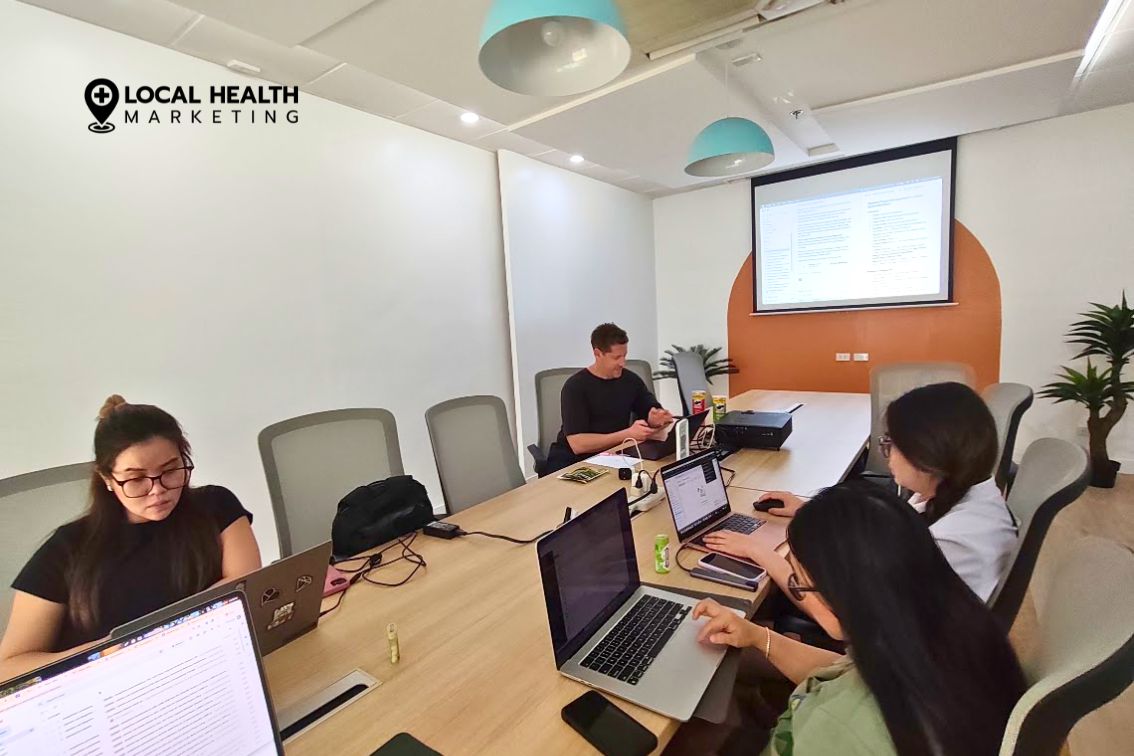
We've had Claude built into our workflow at LHM for a while now. What changed this week wasn't the tool. It was Michael, who's spent months figuring out sharper ways for the team to actually use it, running a four-day training from Monday to Thursday to get everyone trying a more deliberate version of what we'd already been doing, tailored to what each of us actually does all day rather than one generic way of prompting it.
Here's the short version: over those four days, work that was already solid got a second pass, and it came back better. Not because Claude wrote it for us, but because each of us started using it in a way that matched our actual job instead of a one-size-fits-all approach.
Where I fit in
I sit in the middle of most projects as the coordinator, the person making sure a brief turns into a scheduled, approved, delivered piece of work without anything falling through a gap. That job is mostly about keeping track of what's been agreed to and who's waiting on what.
This week I leaned on Claude to hold that structure for me, feeding it our actual process instead of asking it to generate something new, so it could flag the next decision before I had to go looking for it. It's not there yet. We hit a wall partway through when it ran out of room to remember everything I'd given it, which was a fair reminder that this only works if we keep feeding it the right context, not just more of it.
Michael's angle
Michael's the one who's been thinking hardest about this across the whole team, and it shows in how he used it himself. Rather than treating Claude as something you ask a question and get an answer from, he's been building it into the front end of client work: drafting the discovery questions before a call happens, so the strategy conversation starts from something considered instead of a blank page.
When something needed a human to actually check it, like confirming a technical setup was live, it said so plainly instead of guessing. That's a small thing, but it's the difference between trusting a tool and babysitting it.
Aiya's week
Aiya is our website builder, and her week was the clearest case of the same brief getting a better result the second time round. Building a page against an approved brief used to mean a fair bit of back and forth on decisions that seemed small in the moment (how a particular tool on the site should actually work, how a form should route) but ate real time.
This week those calls got made faster, with more of the groundwork done before she sat down to build, which meant more of her actual time went into the build itself rather than figuring out what to build.
Jaimee's catch
Jaimee is our SEO mastermind, and this is where the improvement was most visible. A piece of architecture work that looked finished got checked again, more thoroughly than the first pass, and the second look caught something the first one had missed. It wasn't a small miss either.
Left uncaught, it would have quietly redirected pages that were actually performing well into the wrong place. That's the kind of mistake that doesn't show up until months later as a ranking drop nobody can explain. Catching it this week, before it shipped, is exactly the kind of second pass we want more of.
What this isn't
None of this is about Claude replacing the thinking. Every one of those calls, the redirect fix, the discovery questions, the build decisions, still came from a person who knows the client and the craft. What changed is how much of the groundwork was already done by the time a person needed to make the call, and how much more likely we were to catch a problem before it became a client-facing one.
Where we go from here
We're still early in making this consistent across the team rather than something each person figures out on their own. But a week where good work came back better, and one real mistake got caught before it went live, is a decent sign of where this is heading. The plan from here is to keep sharpening how each of us uses it for our own part of the job, and to get better at feeding it the context it actually needs rather than expecting it to fill gaps we haven't told it about.
If you run a small agency and you're wondering whether this is worth the effort beyond generating faster copy, our answer so far is that the real value showed up in the checking, not the writing. Whatever the recurring, easy-to-miss risk is in your own process, that's the place to start.
Want to try it yourself?
We've got a small number of guest passes for a free week of Claude Code, Anthropic's coding and workflow tool. If you'd like to see what we've been talking about firsthand, grab one here (limited spots, while they last).